triiodomethane

Triiodomethane structural formula

Structural formula

Business number 01JM
Molecular formula CHI3
Molecular weight 393.73
label

Seaiodoform,

yellow iodine,

iodoform,

IPG Dry Adhesive Strips,

Carbon triiodide,

Triiodomethane

Numbering system

CAS number:75-47-8

MDL number:MFCD00001069

EINECS number:200-874-5

RTECS number:PB7000000

BRN number:1697010

PubChem number:24881012

Physical property data

1. Characteristics: yellow powder or crystal with unpleasant odor. [1]

2. Melting point (?): 115~120[2]

3. Boiling point (?) :218[3]

4. Relative density (water = 1): 4.01[4]

5. Relative Vapor density (air = 1): 13.0[5]

6. Octanol/water partition coefficient: 3.03[6]

7. Solubility: Slightly soluble in water, soluble in benzene, ether and acetone. [7]

8. Crystal phase standard claims heat (enthalpy) (kJ·mol-1): 141.0

9. Gas phase standard claimed heat (enthalpy) (kJ·mol-1): 210.9

10. Gas phase standard entropy (J·mol-1 ·K-1): 355.62

11. Gas phase standard free energy of formation (kJ·mol-1): 178.0

12. Vapor phase standard hot melt (J·mol-1·K-1): 75.07

Toxicological data

1. Acute toxicity[8]

LD50: 355mg/kg (rat oral); 1184mg/kg (rabbit dermal )

LC50: 2657mg/m3 (mouse inhalation, 7h)

2. Irritation No information available

3. Mutagenicity [9] Microbial mutagenicity: Salmonella typhimurium 67?g/dish. Unprogrammed DNA synthesis and sister chromosome exchange in hamster embryos: 1mg/L.

Ecological data

1. Ecotoxicity[10] LC50: 2.92mg/L (96h) (fathead minnow, dynamic)

2. Biodegradability No data yet

3. Non-biodegradability [11] In the air, when the concentration of hydroxyl radicals When the concentration is 5.00×10⁵ pieces/cm3, the degradation half-life is 55d (theoretical).

4. Other harmful effects [12] This substance is harmful to the environment and attention should be paid to atmospheric pollution.

Molecular structure data

1. Molar refractive index: 45.54

2. Molar volume (cm3/mol): 101.8

3. Isotonic specific volume (90.2K ): 291.2

4. Surface tension (dyne/cm): 66.7

5. Polarizability (10-24cm3): 18.05

Compute chemical data

1. Reference value for hydrophobic parameter calculation (XlogP): 2.7

2. Number of hydrogen bond donors: 0

3. Hydrogen bond numberNumber of isomers: 0

4. Number of rotatable chemical bonds: 0

5. Number of tautomers: None

6. Topological molecular poles Surface area 0

7. Number of heavy atoms: 4

8. Surface charge: 0

9. Complexity: 8

10. Number of isotope atoms: 0

11. Number of determined atomic stereocenters: 0

12. Number of uncertain atomic stereocenters: 0

13 .Determined number of stereocenters of chemical bonds: 0

14. Uncertain number of stereocenters of chemical bonds: 0

15. Number of covalent bond units: 1

Properties and stability

1. Stability[13] Stable

2. Incompatible substances[14] Strong oxidants, strong bases, alkali metals, mercury and its compounds

3. Conditions to avoid contact[15] Light, heat , friction, impact

4. Polymerization hazard[16] No polymerization

5. Decomposition products[17] Hydrogen iodide

Storage method

Storage Precautions[18] Store in a cool, ventilated warehouse. Keep away from fire and heat sources. Avoid light. The packaging is sealed. They should be stored separately from oxidants, alkalis, alkali metals, and food chemicals, and avoid mixed storage. Suitable materials should be available in the storage area to contain spills.

Synthesis method

It is obtained by halogenation and hydrolysis of acetone (or ethanol). First add water, sodium iodide and acetone into the reaction pot, add ice and cool down to 10°C. Slowly add sodium hypochlorite while stirring until the end point is reached when no turbidity occurs, and control the temperature not to exceed 20°C. Let it stand for 1 hour, suck off the supernatant, take out the iodoform layer and filter. Wash the filter cake with water until it is neutral, and then wash it with distilled water until there is no chlorine radical. Then dry it at 35-40? to get the finished product. In addition, this product can also be prepared by reacting chloroform with methyl iodide.

Purpose

1. Used as a preservative and disinfectant in medicine and biochemistry.

2. Used as chemical intermediates and preservatives. [19]

extended-reading:https://www.morpholine.org/trimethylhydroxyethyl-bisaminoethyl-ether/
extended-reading:https://www.morpholine.org/catalyst-dabco-8154-acid-blocked-tertiary-amine-catalyst/
extended-reading:https://www.bdmaee.net/u-cat-5003-catalyst-cas868077-29-6-sanyo-japan/
extended-reading:https://www.cyclohexylamine.net/strong-gel-amine-catalyst-bx405-low-odor-amine-catalyst-bx405/
extended-reading:https://www.newtopchem.com/archives/44380
extended-reading:https://www.cyclohexylamine.net/high-quality-246-trisdimethylaminomethylphenol-cas-90-72-2-dmp-30/
extended-reading:https://www.cyclohexylamine.net/dabco-2040-low-odor-amine-catalyst/
extended-reading:https://www.newtopchem.com/archives/44239
extended-reading:https://www.newtopchem.com/archives/649
extended-reading:https://www.bdmaee.net/dabco-pt303-tertiary-amine-catalyst-dabco-pt303-catalyst-dabco-pt303/
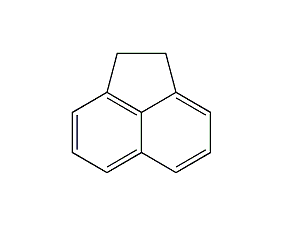
acenaphthene

acenaphthene structural formula

Structural formula

Business number 01TN
Molecular formula C12H10
Molecular weight 154.21
label

naphthoethane,

Naphthaethyl ring,

Versaphos,

naphthyl ring,

rylene,

acenaphthene,

Killer,

acenaphthene,

Er,

rylene,

Ethane naphthalene,

Naphthylene ethylene,

1,2-Dihydroacemaphthylene,

peri-Ethylenenaphthalene,

1,8-Ethylenenaphthalene,

Aromatic hydrocarbons

Numbering system

CAS number:83-32-9

MDL number:MFCD00003807

EINECS number:201-469-6

RTECS number:AB1000000

BRN number:386081

PubChem ID:None

Physical property data

1.Characteristics: white needle-like crystals. [1]

2. Melting point (?): 95[2]

3. Boiling point (?): 279 [3]

4. Relative density (water = 1): 1.024[4]

5. Relative vapor density (Air=1): 5.32[5]

6. Saturated vapor pressure (kPa): 1.33 (131.2?)[6]

7. Critical pressure (MPa): 3.1[7]

8. Octanol/water partition coefficient: 3.92[8]

9. Flash point (?): 120[9]

10. Explosion limit (%): 5.3[10]

11. Lower explosion limit (%): 0.8[11]

12. Solubility: insoluble in water, slightly soluble in ethanol, Soluble in chloroform, benzene, toluene, glacial acetic acid and petroleum ether. [12]

13. Gas phase standard combustion heat (enthalpy) (kJ·mol-1): -6307.3

14. Gas phase standard claimed heat (enthalpy) (kJ·mol-1): 156.0

15. Crystal phase standard combustion heat (enthalpy) (kJ·mol -1): -6221.6

16. Crystal phase standard claims heat (enthalpy) (kJ·mol-1): 70.3

Toxicological data

1. Acute toxicity[13] LD50: 600mg/kg (rat abdominal cavity)

2. Irritation strong> No data yet

3. Mutagenicity[14] Microbial mutagenicity: Salmonella typhimurium spp. 0.5nmol/dish (48h). Cytogenetic analysis: hamster lung 10mmol/L (6h)

Ecological data

1. Ecotoxicity[14]

LC50: 1.7mg/L (72h), 1.6mg/L (96h) (blackhead Minnow);

7.2mg/L (24h), 1.7mg/L (96h) (bluegill sunfish, static);

1.57mg/L (24h), 1.13mg/L??48h), 0.8mg/L (72h), 0.67mg/L (96h) (rainbow trout); 0.96mg/L (96h) (sugar shrimp, static)

EC50: 0.52mg/L (96h) (green algae); 0.5mg/L (96h) (Skeletonema costatum)

2. Biodegradability[15]

Aerobic biodegradation (h): 295~2448

Anaerobic biodegradation (h): 1180~9792

3. Abiotic degradation Properties[16]

Aqueous phase photolysis half-life (h): 3~60

Photolysis maximum light absorption wavelength range (nm ): 288~320

Photooxidation half-life in air (h): 0.879~8.79

Molecular structure data

1. Molar refractive index: 51.65

2. Molar volume (cm3/mol): 134.9

3. Isotonic specific volume (90.2K ): 357.2

4. Surface tension (dyne/cm): 49.2

5. Dielectric constant (F/m): 3.11

6. Polar Chemical rate (10-24cm3): 20.47

Compute chemical data

1. Reference value for hydrophobic parameter calculation (XlogP): None

2. Number of hydrogen bond donors: 0

3. Number of hydrogen bond acceptors: 0

4. Number of rotatable chemical bonds: 0

5. Number of tautomers: none

6. Topological molecule polar surface area 0

7. Number of heavy atoms: 12

8. Surface charge: 0

9. Complexity: 155

10. Number of isotope atoms: 0

11. Determine the number of atomic stereocenters: 0

12. Uncertain number of atomic stereocenters: 0

13. Determine the number of chemical bond stereocenters: 0

14. Number of uncertain chemical bond stereocenters: 0

15. Number of covalent bond units: 1

Properties and stability

1. Flammable and irritating to eyes, respiratory system and skin. Appropriate protective clothing should be worn for heavy use. Avoid contact with eyes and skin. In case of contact with eyes, rinse immediately with plenty of water.

2. Stability[17] Stable

3. Incompatible substances[18] Strong oxidizing agent

4. Conditions to avoid contact[19] Heat

5. Aggregation hazards[20] No aggregation

Storage method

Storage Precautions[21] Stored in a cool, ventilated warehouse. Keep away from fire and heat sources. The storage temperature should not exceed 35?. The packaging is sealed. should be kept away from oxidizer, do not store together. Use explosion-proof lighting and ventilation facilities. It is prohibited to use mechanical equipment and tools that are prone to sparks. Suitable materials should be available in the storage area to contain spills.

Synthesis method

1. In high-temperature tar, it contains about 1.2%-1.8% acenaphthene. The wash oil separated from coal tar distillation is divided into various narrow fractions by distillation method, and industrial acenaphthene is produced from the 270-280°C fraction.

2. It can also be produced by the interaction between naphthalene and ethylene.

Purpose

1. Determination of aromatic aldehydes. Fungicides. Manufacturing of dyes and plastics.

2. Used as dye intermediates, pesticides, fungicides, etc. [22]

extended-reading:https://www.bdmaee.net/wp-content/uploads/2021/05/2-3.jpg
extended-reading:https://www.newtopchem.com/archives/40426
extended-reading:https://www.bdmaee.net/tmr-4-dabco-tmr-4-trimer-catalyst-tmr-4/
extended-reading:https://www.bdmaee.net/wp-content/uploads/2022/08/7-1.jpg
extended-reading:https://www.bdmaee.net/wp-content/uploads/2022/08/115-12.jpg
extended-reading:https://www.newtopchem.com/archives/44261
extended-reading:https://www.newtopchem.com/archives/44006
extended-reading:https://www.newtopchem.com/archives/category/products
extended-reading:https://www.bdmaee.net/wp-content/uploads/2022/08/102-7.jpg
extended-reading:https://www.bdmaee.net/niax-a-1/

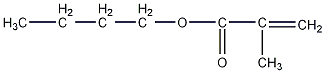
n-butyl methacrylate

N-butyl methacrylate structural formula

Structural formula

Business number 02CV
Molecular formula C8H14O2
Molecular weight 142.20
label

n-Butyl isobutyrate,

n-butyl methacrylate,

butyl methacrylate,

Butyl-2-methyl-2-acrylate,

n-butyl methacrylate,

2-n-Butyl methacrylate,

n-butyl methacrylate,

Butyl methacrylate (containing stabilizer hydroquinone),

n-Butyl methacrylate,

2-Methyl-2-propenoic acid butyl ester,

2-Methylacrylic acid butyl ester,

BMA,

paint solvents,

petroleum additives,

Electronic coating raw materials and intermediates

Numbering system

CAS number:97-88-1

MDL number:MFCD00009444

EINECS number:202-615-1

RTECS number:OZ3675000

BRN number:773960

PubChem number:24883107

Physical property data

1. Properties: colorless and transparent liquid with sweet and ester smell. [1]

2. Melting point (?): -76.3~-74.9[2]

3. Boiling point ( ?): 160~163[3]

4. Relative density (water=1): 0.90 (20?)[4]

5. Relative vapor density (air=1): 4.8[5]

6. Saturated vapor pressure (kPa): 0.65 (20?)[6]

7. Heat of combustion (KJ/mol): -4891.7[7]

8. Critical pressure (MPa ): 2.6[8]

9. Octanol/water partition coefficient: 2.88[9]

10. Flash Point (?): 41; 54.4 (OC): 52.2 (OC) [10]

11. Ignition temperature: 294[11]

12. Explosion upper limit (%): 8[12]

13. Explosion lower limit (%): 2[13] sup>

14. Solubility: Insoluble in water, miscible in alcohol and ether, and soluble in most organic solvents. [14]

Toxicological data

1. Acute toxicity: Mouse abdominal LD50: 1490 mg/kg; Rabbit transdermal LD50: 11300 mg/kg; Rat oral LD50: 20g/kg; Rat inhalation LC50: 19689mg/m3, 4 hours;

2. It is irritating to the eyes, respiratory system and skin, and may cause allergies in contact with the skin.

3. Acute toxicity[15]

LD50: 16g/kg (rat Oral); 1490mg/kg (mouse intraperitoneal); 11300mg/kg (rabbit transdermal)

LC50: 19689mg/m3 ppm (rat inhalation, 4h)

4. Irritation[16] Rabbit transdermal: 500ul, mild irritation.

5. Subacute and…Sexual toxicity[17] Rat oral administration: 5% LD50, 4 to 6 months (feeding), moderate accumulation.

Ecological data

1. Ecotoxicity[18] EC50: 37~55mg/L (5, 15, 30min) (photobacteria, Microtox Test)

2. Biodegradability[19] MITI-I test, initial concentration 100ppm, sludge concentration 30ppm, 38% degraded after 28 days.

3. Non-biodegradability[20] In the air, when the hydroxyl radical concentration is 5.00×10⁵ pieces/cm3, the degradation half-life is 17h (theoretical).

When the pH value is 11, the hydrolysis half-life is 4 hours.

4. Bioconcentration[21] BCF: 91 (theoretical)

5. Other harmful effects[22] This substance may be harmful to the environment, and special attention should be paid to water bodies.

Molecular structure data

1. Molar refractive index: 40.45

2. Molar volume (cm3/mol): 158.9

3. Isotonic specific volume (90.2K ): 360.3

4. Surface tension (dyne/cm): 26.4

5. Polarizability: 16.03

Compute chemical data

1. Reference value for hydrophobic parameter calculation (XlogP): None

2. Number of hydrogen bond donors: 0

3. Number of hydrogen bond acceptors: 2

4. Number of rotatable chemical bonds: 5

5. Number of tautomers: none

6. Topological molecule polar surface area 26.3

7. Number of heavy atoms: 10

8. Surface charge: 0

9. Complexity: 127

10. Number of isotope atoms: 0

11. Determine the number of atomic stereocenters: 0

12. Uncertain number of atomic stereocenters: 0

13. Determine the number of chemical bond stereocenters: 0

14. Number of uncertain chemical bond stereocenters: 0

15. Number of covalent bond units: 1

Properties and stability

1. This product is basically the same as methyl methacrylate and has lower toxicity. The oral LD50 in rats is 20mL/kg body weight. The protection requirements are the same as those for methyl methacrylate.

2. Stability[23] Stable

3. Incompatible substances[24] Strong oxidants, strong acids, strong alkali

4. Conditions to avoid contact [25] Heat, light, ultraviolet rays , contact with air

5. Polymerization hazard[26] Polymerization

Storage method

Storage Precautions[27] Usually products contain polymerization inhibitors. Store in a cool, ventilated warehouse. Keep away from fire and heat sources. The storage temperature should not exceed 37?. The packaging must be sealed and must not come into contact with air. They should be stored separately from oxidants, acids, and alkalis, and avoid mixed storage. It should not be stored in large quantities or for long periods of time. Use explosion-proof lighting and ventilation facilities. It is prohibited to use mechanical equipment and tools that are prone to sparks. The storage area should be equipped with emergency release equipment and suitable containment materials.

Synthesis method

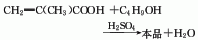
Methacrylic acid and n-butanol undergo an esterification reaction under the catalysis of sulfuric acid, and then undergo salting out and distillation to obtain the finished product.

Methacrylic acid and n-butanol The esterification reaction is carried out in the presence of sulfuric acid catalyst and polymerization inhibitor hydroquinone, and then the finished product is obtained through salting out and distillation. See “butyl acrylate”. The reaction formula is as follows:

Purpose

1. Organic synthesis, preparation of embedding media for electron microscopy, adhesives for plastics and optical glasses, emulsifiers for textiles, leather shoes and papermaking, solvents for coatings, and petroleum additives.

2. Used as a soft monomer in the manufacture of acrylic solvent-based and emulsion-based adhesives. Its low viscosity polymer can be used as special coatings, paper and leather processing aids, fiber treatment agents, metal surface treatment agents, etc. Poly-n-butyl methacrylate produced from this product is a transparent elastic material and is widely used as the interlayer of aircraft cockpit safety glass and bulletproof glass such as automobiles, as well as precision radio equipment. It can also be copolymerized with the same series of unsaturated esters and acids to produce materials for various uses.

3. Mainly used to manufacture acrylate polymers and copolymers. Used in the manufacture of bulletproof glass and precision radio equipment, and used as oil additives in the petroleum industry.

4. Used in organic synthesis, binders for manufacturing plastics and optical glasses, and auxiliaries for textile, leather and papermaking. [28]

extended-reading:https://www.newtopchem.com/archives/44759
extended-reading:https://www.bdmaee.net/wp-content/uploads/2022/08/FASCAT4100-catalyst-monobutyl-tin-oxide-FASCAT-4100.pdf
extended-reading:https://www.bdmaee.net/wp-content/uploads/2022/08/-RP205-Addocat-9727P-high-efficiency-amine-catalyst.pdf
extended-reading:https://www.newtopchem.com/archives/43088
extended-reading:https://www.newtopchem.com/archives/45094
extended-reading:https://www.morpholine.org/dabco-ne1060-non-emissive-polyurethane-catalyst/
extended-reading:https://www.bdmaee.net/wp-content/uploads/2021/05/137-5.jpg
extended-reading:https://www.bdmaee.net/dimethylaminoethoxyethanol-cas-1704-62-7-n-dimethylethylaminoglycol/
extended-reading:https://www.bdmaee.net/niax-a-1-catalyst-bisdimethylaminoethyl-ether-momentive/
extended-reading:https://www.bdmaee.net/wp-content/uploads/2020/07/88-1.jpg