L-cysteine

L-cysteine ??structural formula

Structural formula

Business number 015S
Molecular formula C3H7NO2S
Molecular weight 121.16
label

L-hemibladder amino acid,

L-beta-mercaptoalanine,

L-2-amino-3-mercaptopropionic acid,

L-Hydrosulfide aminopropionic acid,

(R)-2-Amino-3-mercaptopropionic acid,

Thioserine,

Detoxification and anti-inflammatory drugs,

Intermediates

Numbering system

CAS number:52-90-4

MDL number:MFCD00064306

EINECS number:200-158-2

RTECS number:HA1600000

BRN number:1721408

PubChem number:24901592

Physical property data

1. Properties: Colorless crystals, slightly odorous.

2. Density (g/mL, 25/4?): Undetermined

3. Relative vapor density (g/mL, air=1): Undetermined

4. Melting point (ºC): 240? (decomposition)

5. Boiling point (ºC, normal pressure): Undetermined

6. Boiling point (ºC, 13.33kpa ):

7. Refractive index: Not determined

8. Flash point (ºC): Not determined

9. Specific rotation (º,): 8.75° (c=12, 2N HCl).

10. Autoignition point or ignition temperature (ºC): Not determined

11. Vapor pressure (kPa, 25ºC): Not determined

12. Saturation Vapor pressure (kPa, 60ºC): Undetermined

13. Heat of combustion (KJ/mol): Undetermined

14. Critical temperature (ºC): Undetermined

15. Critical pressure (KPa): Undetermined

16. Log value of oil-water (octanol/water) partition coefficient: Undetermined

17. Explosion upper limit (% , V/V): Undetermined

18. Lower explosion limit (%, V/V): Undetermined

19. Solubility: soluble in water, alcohol, ammonia and acetic acid , insoluble in ether, benzene, acetone, ethyl acetate, carbon disulfide and carbon tetrachloride.

Toxicological data

Acute toxicity:

Oral LD50 660mg/kg(mus)

1890mg/kg(rat)

Main irritant effects:

On skin: Irritation to skin and mucous membranes.

On the eyes: Irritation effects.

Sensitization: No known sensitizing effects.

Ecological data

General Notes

Water Hazard Level 1 (German Regulation? (Self-assessment via list) This substance is slightly hazardous to water.

Do not allow undiluted or large amounts of product to come into contact with groundwater, waterways or sewage systems.

Do not discharge materials into the surrounding environment without government permission.

Molecular structure data

1. Molar refractive index: 28.90

2. Molar volume (cm3/mol): 90.7

3. Isotonic specific volume (90.2K ): 251.5

4. Surface tension (dyne/cm): 58.9

5. Polarizability (10-24cm3): 11.45 p>

Compute chemical data

1. Reference value for hydrophobic parameter calculation (XlogP): None

2. Number of hydrogen bond donors: 3

3. Number of hydrogen bond acceptors: 4

4. Number of rotatable chemical bonds: 2

5. Number of tautomers: none

6. Topological molecule polar surface area 64.3

7. Number of heavy atoms: 7

8. Surface charge: 0

9. Complexity: 75.3

10. Number of isotope atoms: 0

11. Determine the number of atomic stereocenters: 1

12. Uncertain number of atomic stereocenters: 0

13. Determine the number of chemical bond stereocenters: 0

14. Number of uncertain chemical bond stereocenters: 0

15. Number of covalent bond units: 1

Properties and stability

1. Irritating. Its aqueous solution or slightly alkaline aqueous solution can be oxidized into cystine by air, and the acidic solution is relatively stable. The biochemical reagent content is not less than 98.5%

2. Exists in tobacco leaves.

Storage method

Should be sealed and stored in a dry place away from light.

Synthesis method

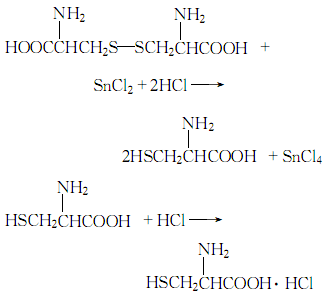
1. Tin particle reduction method Dissolve cystine in dilute hydrochloric acid, filter, add tin particles to the filtrate, heat and reflux for 2 hours. Dilute the reducing solution with water, remove the remaining tin particles, add hydrogen sulfide to saturate it, filter it, wash the filter residue with a small amount of water, combine the washing and filtrate, concentrate under reduced pressure, cool and crystallize, filter and dry to obtain L-cysteine ??salt Acid.

2. Electrolytic reduction method Add distilled water, hydrochloric acid, and cystine to the electrolytic tank, stir and dissolve, and maintain the electrolysis below 50°C until the end point. The resulting electrolyte was passed through hydrogen sulfide for several hours and then filtered. The filtrate is decolorized by adding activated carbon, filtered, concentrated under reduced pressure, crystallized by cooling, filtered, and dried to obtain L-cysteine ??hydrochloride.

3. Synthesis: It can be made by hydrolyzing protein (such as human hair) with hydrochloric acid, then treating it with copper oxide, and decomposing it with hydrogen sulfide. It can also be derived from the degradation of cystine.

Purpose

1. Mainly used in medicine, cosmetics, biochemical research, etc. Used in bread ingredients to promote gluten formation, fermentation, mold release, and prevent aging. Used in natural juices to prevent vitamin C from oxidizing and preventing juices from turning brown. This product has detoxification effect and can be used for acrylonitrile poisoning and aromatic acid poisoning. This product also has the function of preventing radiation damage to the human body, and is also a drug for treating bronchitis, especially as a phlegm-reducing drug (mostly used in the form of acetyl L-cysteine ??methyl ester). In cosmetics, it is mainly used in beauty water, Perm liquid, sun protection cream, etc.

extended-reading:https://www.newtopchem.com/archives/1862
extended-reading:https://www.bdmaee.net/wp-content/uploads/2022/08/8.jpg
extended-reading:https://www.bdmaee.net/metal-catalyst/
extended-reading:https://www.bdmaee.net/jeffcat-td-33a-catalyst-cas107-16-9-huntsman/
extended-reading:https://www.bdmaee.net/wp-content/uploads/2016/06/Jeffcat-ZF-22-MSDS.pdf
extended-reading:https://www.morpholine.org/catalyst-dabco-8154-acid-blocked-tertiary-amine-catalyst/
extended-reading:https://www.newtopchem.com/archives/974
extended-reading:https://www.newtopchem.com/archives/690
extended-reading:https://www.newtopchem.com/archives/44765
extended-reading:https://www.bdmaee.net/dibutyl-stannane-diacetate/
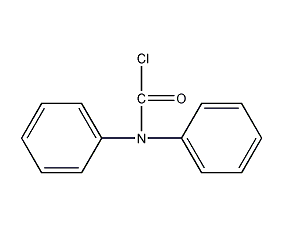
diphenylcarbamoyl chloride

Diphenylcarbamoyl chloride structural formula

Structural formula

Business number 01T9
Molecular formula C13H10ClNO
Molecular weight 231.68
label

Diphenylcarbamocarbon chloride,

dimethylcarbamoyl chloride,

N,N-Diphenylchloroformamide,

diphenylcarbamide chloride,

diphenylcarbamoyl chloride,

Chloroformic acid diphenylamide,

DPC-Cl

Numbering system

CAS number:83-01-2

MDL number:MFCD00000633

EINECS number:201-450-2

RTECS number:EY5065000

BRN number:515312

PubChem number:24866819

Physical property data

1. Appearance: white powder

2. Density (g/mL, 25/4?): Undetermined

3. Relative vapor density (g/mL, air =1): Uncertain

4. Melting point (ºC): 85

5. Boiling point (ºC, normal pressure): Uncertain

6. Boiling point (ºC, 5.2kPa): Uncertain

7. Refractive index: Uncertain

8. Flash point (ºC): Uncertain

9. Ratio Optical rotation (º): Uncertain

10. Autoignition point or ignition temperature (ºC): Uncertain

11. Vapor pressure (kPa, 25ºC): Uncertain

p>

12. Saturated vapor pressure (kPa, 60ºC): Uncertain

13. Heat of combustion (KJ/mol): Uncertain

14. Critical temperature (ºC ): Uncertain

15. Critical pressure (KPa): Uncertain

16. Log value of oil-water (octanol/water) partition coefficient: Uncertain

17. Upper explosion limit (%, V/V): Uncertain

18. Lower explosion limit (%, V/V): Uncertain

19. Solubility: Dissolved in most common solvents.

Toxicological data

None yet

Ecological data

None yet

Molecular structure data

1. Molar refractive index: 65.21

2. Molar volume (cm3/mol): 182.5

3. Isotonic specific volume (90.2K): 487.2

4. Surface tension (dyne/cm): 50.8

5. Polarizability (10-24cm3): 25.85

Compute chemical data

1. Hydrophobic parameter calculation reference value (XlogP): 3.8

2. Number of hydrogen bond donors: 0

3. Number of hydrogen bond acceptors: 1

4. Number of rotatable chemical bonds: 2

5. Topological molecular polar surface area (TPSA): 20.3

6. Number of heavy atoms: 16

7. Surface charge: 0

8. Complexity: 214

9. Number of isotope atoms: 0

10. Determine the number of atomic stereocenters : 0

11. Uncertain number of atomic stereocenters: 0

12. Determined number of chemical bond stereocenters: 0

13. Uncertain chemical bond formation Number of structural centers:0

14. Number of covalent bond units: 1

Properties and stability

It is hygroscopic and should be kept away from strong alkalis and strong oxidants; it is corrosive; unlike dimethylamino, diethylamino, and methylphenylcarbamoyl chloride, DPC-Cl does not have carcinogenic properties.

Storage method

Should be sealed and stored in a cool, dry place

Synthesis method

None yet

Purpose

1. Phenolic reagents. Organic Synthesis.

2. Diphenylcarbamoyl chloride (DPC-Cl) is a commonly used acylating reagent that can be used for Friedel-Crafts acylation; it can acylate amines, amino acids, thiols, phenols, and carboxylic acids Salt, etc.; can be used as a protective group during oligonucleotide synthesis, and the protective group can be removed under the action of concentrated ammonia-methanol or NaOH-methyl(ethanol) alcohol.

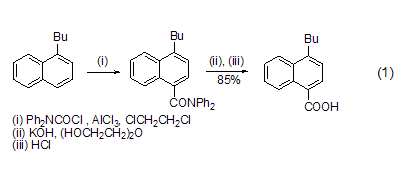
Introduction of carboxyl group Under the catalysis of AlCl3, DPC-Cl can introduce a carboxyl group on the aromatic ring. Alkyl or alkoxy substituted aromatic rings are susceptible to reaction. The product diphenylamide is hydrolyzed with alkali and then acidified to obtain carboxylic acid (formula 1)[1].

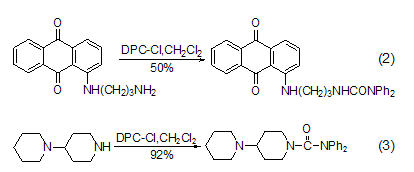
Reaction with amino groups DPC-Cl easily reacts with primary (formula 2) [2], secondary fatty amine (formula 3) [3] etc. [ 4~7].

Reaction with sulfhydryl group Under alkaline conditions (such as NaHCO3), DPC-Cl can react with thiols in ethanol solution (Formula 4)[8].

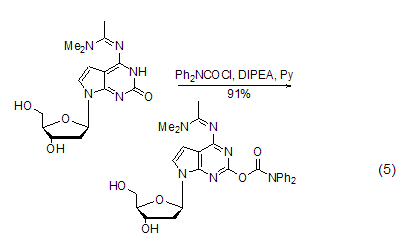
Used as oligomeric Protective groups during nucleotide synthesisWhen synthesizing oligonucleotides, the bases of guanine nucleosides are prone to side reactions and need to be protected. DPC-Cl can protect the enol isoforms of guanine bases. The conformation is protected by acylation. This method plays an important role in the synthesis of nucleoside compounds with guanine bases and those similar to guanine bases [9~12] ( Formula 5).

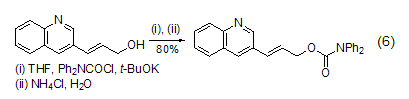
With double bonds Reaction of alcohol compounds DPC-Cl can undergo esterification reaction with alcohol compounds containing double bonds (Formula 6)[13].

With azide Reaction of sodium DPC-Cl can react with sodium azide to generate the corresponding azide compound (Formula 7)[14].

extended-reading:https://www.bdmaee.net/potassium-neodecanoate-2/
extended-reading:https://www.bdmaee.net/n-dimethylaminopropyldiisopropanolamine/
extended-reading:https://www.cyclohexylamine.net/dibutyltin-oxide-cas-818-08-6/
extended-reading:https://www.bdmaee.net/polyurethane-reaction-inhibitor-y2300-polyurethane-reaction-inhibitor-reaction-inhibitor-y2300/
extended-reading:https://www.bdmaee.net/dabco-k2097-catalyst-cas127-08-2-evonik-germany/
extended-reading:https://www.newtopchem.com/archives/44959
extended-reading:https://www.bdmaee.net/wp-content/uploads/2022/08/TMR-4–TMR-4-trimer-catalyst-TMR-4.pdf
extended-reading:https://www.bdmaee.net/dimethyltin-oxide/
extended-reading:https://www.bdmaee.net/n-dimethylaminopropyl-diisopropanolamine-cas-63469-23-8-pc-cat-np10/
extended-reading:https://www.bdmaee.net/wp-content/uploads/2022/08/33-11.jpg

Cysteine ??hydrochloride

Cysteine ??hydrochloride structural formula

Structural formula

Business number 015R
Molecular formula C3H8ClNO2S
Molecular weight 157.62
label

L-cysteine ??hydrochloride,

L-cysteine ??hydrochloride hydrate,

Alpha-amino-beta-mercaptopropionic acid hydrochloride,

L-cysteine ??hydrochloride,

fu amino acid,

L-mercaptoalanine hydrochloride anhydrous,

L-Cysteine ??hydrochloride,

Cysteine ??HCl,

2-Amino-3-mercaptopropanoic acid,

3-Mercaptoalanine,

Biochemical reagents

Numbering system

CAS number:52-89-1

MDL number:MFCD00064553

EINECS number:200-157-7

RTECS number:HA2275000

BRN number:3560277

PubChem number:24892395

Physical property data

1. Character: White crystal. Hygroscopic.

2. Density (g/mL, 25/4?): Not determined

3. Relative vapor density (g/mL, air=1): Not determined Determined

4. Melting point (ºC): 175~178? (decomposition)

5. Boiling point (ºC, normal pressure): Undetermined

6. Boiling point (ºC, 13.33kpa):

7. Refractive index: Not determined

8. Flash point (ºC): Not determined

9. Specific rotation Degree (º,): 5.0° (5mol/L, in hydrochloric acid)

10. Autoignition point or ignition temperature (ºC): Undetermined

11. Vapor pressure (kPa , 25ºC): Undetermined

12. Saturated vapor pressure (kPa, 60ºC): Undetermined

13. Heat of combustion (KJ/mol): Undetermined

14. Critical temperature (ºC): Undetermined

15. Critical pressure (KPa): Undetermined

16. Log value of oil-water (octanol/water) partition coefficient : Undetermined

17. Explosion upper limit (%, V/V): Undetermined

18. Explosion lower limit (%, V/V): Undetermined

19. Solubility: Soluble in water, ethanol and acetone. Aqueous solutions are acidic.

Toxicological data

1. Acute toxicity: mouse abdominal LC50: 1250 mg/kg; mouse intravenous LC50: 771 mg/kg; mouse LC50: 3 mg/kg; 2. Mutagenicity: mutation microorganismsTEST system: bacteria – Salmonella typhimurium: 20mg/plate; Cytogenetic analysisTEST system: rodents?-Hamster fibroblasts: 2mg/L

Ecological data

None yet

Molecular structure data

1. Molar refractive index: 28.90

2. Molar volume (cm3/mol): 90.7

3. Isotonic specific volume (90.2K ): 251.5

4. Surface tension (dyne/cm): 58.9

5. Polarizability (10-24cm3): 11.45

Compute chemical data

1. Reference value for hydrophobic parameter calculation (XlogP): None

2. Number of hydrogen bond donors: 4

3. Number of hydrogen bond acceptors: 4

4. Number of rotatable chemical bonds: 2

5. Number of tautomers: none

6. Topological molecule polar surface area 64.3

7. Number of heavy atoms: 8

8. Surface charge: 0

9. Complexity: 75.3

10. Number of isotope atoms: 0

11. Determine the number of atomic stereocenters: 1

12. Uncertain number of atomic stereocenters: 0

13. Determine the number of chemical bond stereocenters: 0

14. Number of uncertain chemical bond stereocenters: 0

15. Number of covalent bond units: 2

Properties and stability

Hygroscopic. Oxidizes and decomposes slowly in air. Aqueous solutions are acidic.

Storage method

Should be sealed and stored in a cool, dry place away from light.

Synthesis method

1. Dissolve cystine in dilute hydrochloric acid, filter and add tin particles to heat and reflux. Dilute the reducing solution with water, remove the remaining tin particles, saturate with hydrogen sulfide, filter, wash the filter residue with a small amount of water, combine the washing liquid and filtrate, concentrate under reduced pressure, cool and crystallize, and dry to obtain L-cysteine ??hydrochloride.

2. Hydrolyzed by ?-keratin contained in hair Cystine can be obtained, and then reduced to cysteine ??through chemical reduction or electrolysis, and hydrochloric acid is added to form a salt.

Purpose

1. Used for biochemical research. Determination of calcium and magnesium in steel raw materials. Reducing agent for determination of hemolysin. Growth culture and enumeration of anaerobic bacteria.

2.Used in biochemistry Research. Determination of calcium and magnesium in steel raw materials. Reducing agent for determination of hemolysin. It is used to treat acrylonitrile and aromatic poisoning, prevent radiation damage, treat bronchitis and reduce phlegm. It is also used in cosmetics to prevent aging, and as a food additive to promote fermentation and maintain umami taste.

3.Used as analytical reagents, As a masking agent, it is used to measure calcium and magnesium. It can be used as a reducing agent for biochemical research, such as hemolysin determination. Also used for the cultivation of anaerobic bacteria.

extended-reading:https://www.bdmaee.net/niax-b-9-balanced-tertiary-amine-catalyst-momentive/
extended-reading:https://www.cyclohexylamine.net/n-methyl-methylcyclohexylamine/
extended-reading:https://www.newtopchem.com/archives/45105
extended-reading:https://www.morpholine.org/category/morpholine/n-methylmorpholine/
extended-reading:https://www.bdmaee.net/wp-content/uploads/2022/08/Dioctyl-tin-oxide-CAS870-08-6-FASCAT-8201-catalyst.pdf
extended-reading:https://www.newtopchem.com/archives/44797
extended-reading:https://www.bdmaee.net/fascat9201-catalyst-dibutyl-tin-oxide-fascat9201/
extended-reading:https://www.bdmaee.net/fascat-9102-catalyst/
extended-reading:https://www.newtopchem.com/archives/39611
extended-reading:https://www.cyclohexylamine.net/bis2dimethylaminoethylether-22%e2%80%b2-oxybisnn-dimethylethylamine/