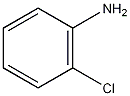
2-Chloroaniline

2-Chloroaniline structural formula

Structural formula

Physical competition number 0298
Molecular formula C6H6ClN
Molecular weight 127
label

o-Chloroaniline,

o-Aminochlorobenzene,

2-Chloroaniline,

2-Chlorobenzenamine,

o-Aminochlorobenzene,

Aromatic nitrogen-containing compounds and their derivatives

Numbering system

CAS number:95-51-2

MDL number:MFCD00007656

EINECS number:202-426-4

RTECS number:BX0525000

BRN number:606077

PubChem number:24853944

Physical property data

1. Properties: colorless, transparent to light yellow oily liquid with ammonia odor. [1]

2. Melting point (?): -1.94[2]

3. Boiling point (?): 209[3]

4. Relative density (water = 1): 1.21[4]

5. Relative vapor Density (air=1): 4.4[5]

6. Saturated vapor pressure (kPa): 0.13 (46.3?)[6]

7. Critical pressure (MPa): 4.59[7]

8. Octanol/water partition coefficient: 1.9[8]

9. Flash point (?): 97; 103 (CC) [9]

10. Ignition temperature (?): 500 [10]

11. Explosion upper limit (%): 8.8[11]

12. Explosion lower limit (%) : 1.5[12]

13. Solubility: Insoluble in water, soluble in ethanol, ether and most organic solvents. [13]

Toxicological data

1. Acute toxicity: mouse oral LD50: 256g/kg; cat skin contact LD50: 222mg/kg; cat subcutaneous LDLo: 310mg/kg;

2. Other multiple dose toxicity : Inhalation TDLo in rats: 14560mg/kg/13W-I; Oral TDLo in mice: 14560mg/kg/13W-I;

3. It is moderately toxic. Easily absorbed by the skin and has hemolytic effect. Can damage the liver and kidneys and cause bladder cancer. The symptoms of poisoning are similar to those of aniline.

4. Acute toxicity[14] LD50: 256mg/kg (mouse oral)

5. Irritation No information available

6. Mutagenicity[15] DNA repair: E. coli 500?g/L. Microbial mutagenicity: Aspergillus nidulans 200mg/L. Mammalian somatic mutation: hamster lung 600?g/L.

Ecological data

1. This substance is harmful to the environment. It is recommended not to let it enter the environment.

2. Ecotoxicity[16]

LC50: 5.65mg/L (96h ) (fathead minnow, dynamic); 6.3mg/L (48h) (medaka)

EC50: 4.2mg/L (24h), 1.8mg/L (48h) (water flea); 200mg /L (24h) (Tetrahymena pyriformis, static); 90mg/L (48h), 40mg/L (72h), 35mg/L (96h) (Scenedesmus, static)

3. Biodegradability[17] MITI-I test, initial concentration 100ppm, sludge concentration 30ppm, degradation 2.7% after 2 weeks.

4. Non-biodegradability[18] In the air, when the hydroxyl radical concentration is 5.00×10⁵pcs/cm3, the degradation half-life is 12h (theoretical).

5. Bioconcentration[19] BCF: 5.4~9 ( Carp, exposure concentration 0.1ppm, exposure time 8 weeks); <14~32 (carp, exposure concentration 0.01ppm, exposure time 8 weeks).

Molecular structure data

1. Molar refractive index: 35.38

2. Molar volume (cm3/mol): 103.6

3. Isotonic specific volume (90.2K ): 268.9

4. Surface tension (dyne/cm): 45.3

5. Polarizability (10-24cm3): 14.02

Compute chemical data

1. Reference value for hydrophobic parameter calculation (XlogP): None

2. Number of hydrogen bond donors: 1

3. Number of hydrogen bond acceptors: 1

4. Number of rotatable chemical bonds: 0

5. Number of tautomers: none

6. Topological molecule polar surface area 26

7. Number of heavy atoms: 8

8. Surface charge: 0

9. Complexity: 74.9

10. Number of isotope atoms: 0

11. Determine the number of atomic stereocenters: 0

12. Uncertain number of atomic stereocenters: 0

13. Determine the number of chemical bond stereocenters: 0

14. Number of uncertain chemical bond stereocenters: 0

15. Number of covalent bond units: 1

Properties and stability

1. Chemical properties: Due to the chlorine substitution on the aromatic nucleus, the basicity of o-chloroaniline (25?, pKa=2.636) is much weaker than that of aniline (25?, pKa=4.595). The chemical properties are similar to aniline and can form salts with inorganic acids, but the acylation reaction and diazotization reaction are slower.

2. This product is highly toxic. Poisoning may occur if swallowed, inhaled vapor or absorbed through skin. It is hemolytic and can cause bladder cancer. During operation, avoid inhaling vapor and prevent contact with skin. Production equipment should be sealed to prevent leakage. The production site should be well ventilated. Operators should wear protective equipment.

3. Stability[20] Stable

4. Incompatible substances[21] Acids, acid chlorides, acid anhydrides, chloroform, strong oxidants

5. Conditions to avoid contact [22] Heating

6. Polymerization hazard[23] No polymerization

7. Decomposition products[24 ] Ammonia, chloride

Storage method

Storage Precautions[25] Store in a cool, ventilated warehouse. Keep away from fire and heat sources. Keep container tightly sealed. They should be stored separately from oxidants, acids, and food chemicals, and avoid mixed storage. Equipped with the appropriate variety and quantity of fire equipment. The storage area should be equipped with emergency release equipment and suitable containment materials.

Synthesis method

1. Obtained from the reduction of o-nitrochlorobenzene: reduce with iron powder in hydrochloric acid medium, reflux for 6-8 hours, and obtain the finished product through steam distillation and vacuum distillation. Iron powder reduction can also be carried out in the presence of formic acid: add 2m3 boiling water to a 10m3 cast iron reduction kettle, then add 100kg o-nitrochlorobenzene, 15kg formic acid, and 1.5t iron powder to perform the reduction reaction. Add 4t o-nitrochlorobenzene in portions within 17-20h. In the meantime, when the reduction reaction proceeds for a quarter of an hour, add 1t of o-nitrochlorobenzene, and at the same time, add 1.5t of iron powder and 15kg of formic acid. If the reaction is slow, add another 1t of iron powder. After the reaction is completed, let it stand to separate the amine layer, let it stand again, let the iron precipitate, and steam the iron slag to distill out the amine. The crude product was distilled under reduced pressure to obtain 3160kg of o-chloroaniline with a yield of 95%. Raw material consumption quota: o-nitrochlorobenzene 1300kg/t, iron powder (90%) 1450kg/t, hydrochloric acid (37%) 380kg/t.
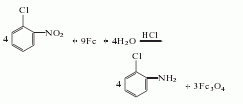
2. The preparation method is O-chloronitrobenzene, iron filings, dilute hydrochloric acid and water are refluxed for 6 to 8 hours, distilled to obtain a crude product, and then distilled to obtain a finished product.
Or use catalytic hydrogenation, that is, use o-chloronitrobenzene as raw material and hydrogenate it in the presence of a catalyst to obtain the finished product.

Refining method: o-chloroaniline is obtained by reducing o-chloronitrobenzene and then vacuum distillation. If it contains the para-isomer, it can be dissolved with an equal amount of sulfuric acid and then steam distilled. The para-isomer remains in the form of sulfate for separation purposes. It can also be dissolved in 10% hot hydrochloric acid. After cooling, the ortho-isomer will crystallize out as hydrochloride salt.

Purpose

1. Used as dye intermediates, solvents, fungicides and reagents. Used as an intermediate for pesticides, synthetic resins, etc. Used to prepare ice dye color base, that is, yellow base GC. It can also be used as the diazo component of azo dyes (such as acid black and acid blue) to produce Permanent Yellow R, Permanent Red FR, Hansa Yellow HR, etc.

2. Methyldichloroaniline is a cross-linking agent used to prepare medicines, pesticides and polyurethane resins. It can also be used in organic synthesis.

3. Used as dye intermediates, solvents, fungicides and reagents. [26]

extended-reading:https://www.bdmaee.net/wp-content/uploads/2022/08/124-2.jpg
extended-reading:https://www.bdmaee.net/toyocat-np-catalyst-tosoh/
extended-reading:https://www.bdmaee.net/wp-content/uploads/2022/08/Catalyst-PT303-PT303-polyurethane-catalyst-PT303.pdf
extended-reading:https://www.bdmaee.net/fentacat-f9-catalyst-cas15461-78-5-solvay/
extended-reading:https://www.newtopchem.com/archives/1112
extended-reading:https://www.newtopchem.com/archives/40320
extended-reading:https://www.cyclohexylamine.net/addocat-so-niax-d-19-pc-cat-t9/
extended-reading:https://www.morpholine.org/category/morpholine/page/2/
extended-reading:https://www.morpholine.org/high-quality-cas-26761-42-2-potassium-neodecanoate/
extended-reading:https://www.bdmaee.net/dibutyltin-diacetate/
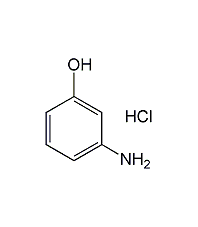
3-Aminophenol hydrochloride

3-aminophenol hydrochloride structural formula

Structural formula

Physical competition number 0158
Molecular formula C6H8ClNO
Molecular weight 145.59
label

Meta-aminophenol hydrochloride,

3-aminophenol hydrochloride,

3-Aminophenol hydrochloride,

Meta-aminophenol hydrochloride,

m-Hydroxyaniline hydrochloride

Numbering system

CAS number:51-81-0

MDL number:None

EINECS number:None

RTECS number:None

BRN number:None

PubChem ID:None

Physical property data

1. Properties: White to light yellow flaky crystals. It gradually changes color when exposed to light or exposed to air.

2. Density (g/mL, 25/4?): Undetermined

3. Relative vapor density (g/mL, air=1): Undetermined

4. Melting point (ºC): 229

5. Boiling point (ºC, normal pressure): Undetermined

6. Boiling point (ºC, 5.2kPa): Undetermined

7. Refractive index: Undetermined

8. Flash point (ºC): Undetermined

9. Specific rotation (º): Undetermined

10. Autoignition point or ignition temperature (ºC): Undetermined

11. Vapor pressure (kPa, 25ºC): Undetermined

12. Saturated vapor Pressure (kPa, 60ºC): Undetermined

13. Heat of combustion (KJ/mol): Undetermined

14. Critical temperature (ºC): Undetermined

15. Critical pressure (KPa): Undetermined

16. Log value of oil-water (octanol/water) partition coefficient: Undetermined

17. Explosion upper limit (%, V/V): Undetermined

18. Lower explosion limit (%, V/V): Undetermined

19. Solubility: Easily soluble in water and ethanol, slightly soluble in Ether. Its aqueous solution is acidic.

Toxicological data

None

Ecological data

None

Molecular structure data

1. Molar refractive index: 32.37

2. Molar volume (cm3/mol): 90.1

3. Isotonic specific volume (90.2K ): 248.1

4. Surface tension (dyne/cm): 57.4

5. Polarizability (10-24cm3): 12.83

Compute chemical data

1. Reference value for hydrophobic parameter calculation (XlogP): None

2. Number of hydrogen bond donors: 3

3. Number of hydrogen bond acceptors: 2

4. Number of rotatable chemical bonds: 0

5. Number of tautomers: 9

6. Topological molecule polar surface area 46.2

7. Number of heavy atoms: 9

8. Surface charge: 0

9. Complexity:74.9

10. Number of isotope atoms: 0

11. Determined number of atomic stereocenters: 0

12. Uncertain number of atomic stereocenters: 0

13. Determine the number of stereocenters of chemical bonds: 0

14. Uncertain number of stereocenters of chemical bonds: 0

15. Number of covalent bond units :2

Properties and stability

1. Gradually changes color when exposed to light or exposed to air. Its aqueous solution is acidic.

2. Harmful if inhaled, taken orally or in contact with skin.

Storage method

Store sealed and away from light.

Synthesis method

None

Purpose

1. Organic synthesis. Dye intermediates. Pharmaceuticals. ?

extended-reading:https://www.bdmaee.net/wp-content/uploads/2022/08/37-4.jpg
extended-reading:https://www.newtopchem.com/archives/category/products/page/113
extended-reading:https://www.newtopchem.com/archives/913
extended-reading:https://www.newtopchem.com/archives/45231
extended-reading:https://www.bdmaee.net/wp-content/uploads/2022/08/NEWTOP8.jpg
extended-reading:https://www.newtopchem.com/archives/45087
extended-reading:https://www.bdmaee.net/wp-content/uploads/2022/08/-37-low-odor-polyurethane-rigid-foam-catalyst-polyurethane-rigid-foam-catalyst.pdf
extended-reading:https://www.cyclohexylamine.net/dabco-mp601-delayed-polyurethane-catalyst/
extended-reading:https://www.morpholine.org/flumorph/
extended-reading:https://www.bdmaee.net/gamma-butyrolactone-gbl-cas96-48-0-gamma-martinolactone/

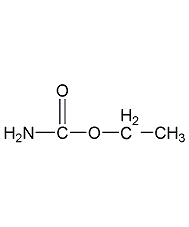
urethane

Ethyl carbamate structural formula

Structural formula

Physical competition number 0157
Molecular formula C3H7NO2
Molecular weight 89
label

urethane,

Carbamic acid ethyl ester,

Ethyl urethane

Numbering system

CAS number:51-79-6

MDL number:MFCD00007966

EINECS number:200-123-1

RTECS number:FA8400000

BRN number:635810

PubChem number:24900632

Physical property data

1. Properties: Colorless and odorless crystals or white crystalline powder with a saltpeter-like smell.

2. Density (g/mL, 48/4?): 1.045

3. Relative vapor density (g/mL, air=1): 3.07

4. Melting point (ºC): 49

5. Boiling point (ºC, normal pressure): 182?184

6. Refractive index (52ºC): 1.4144

7. Refractive index (50ºC): 14.24

8. Refractive index (70ºC): 13.20

9. Flash point (ºC): 92

10. Heat of formation (KJ/mol): 1.664

11. Vapor pressure (kPa, 103ºC): 7.20

12. Vapor pressure (kPa, 120.7ºC): 14.40

13. Vapor pressure (kPa, 177ºC): 92.93

14. Solubility (%, 15.5ºC, water): 48

15. Solubility: soluble Soluble in water, ethanol, ether, chloroform and glycerin, slightly soluble in olive oil. It can dissolve almost all organic liquids except aliphatic hydrocarbons, such as aromatic hydrocarbons, esters, organic acids, alcohols and ethers.

Toxicological data

None

Ecological data

None

Molecular structure data

1. Molar refractive index: 21.25

2. Molar volume (cm3/mol): 85.2

3. Isotonic specific volume (90.2K ): 205.2

4. Surface tension (dyne/cm): 33.6

5. Polarizability (10-24cm3): 8.42

Compute chemical data

1. Reference value for hydrophobic parameter calculation (XlogP): None

2. Number of hydrogen bond donors: 1

3. Number of hydrogen bond acceptors: 2

4. Number of rotatable chemical bonds: 2

5. Number of tautomers: 2

6. Topological molecule polar surface area 52.3

7. Number of heavy atoms: 6

8. Surface charge: 0

9. Complexity: 52.8

10. Number of isotope atoms: 0

11. Determine the number of atomic stereocenters: 0

12. Uncertain number of atomic stereocenters: 0

13. Determine the number of chemical bond stereocenters: 0

14. Number of uncertain chemical bond stereocenters: 0

15. Number of covalent bond units: 1

Properties and stability

1. The aqueous solution is neutral. Potentially carcinogenic. It can be hydrolyzed by acid into ethanol, carbon dioxide and ammonium salt, and hydrolyzed by alkali into ethanol and cyanate. Can transesterify with higher carbon alcohols.

2.This product is toxic. The intravenous injection of LD50 into rabbits was 2000mg/kg body weight. The oral LD50 of white mice is 2700mg/kg body weight. Production equipment should be well-sealed to prevent escape, leakage, dripping, and leakage. Storage containers should be marked with toxic labels to prevent accidental ingestion. Operators wear rubber gloves. After skin contact, wash with water and soap; if ingested, seek medical attention promptly.

3. Exist in tobacco leaves and mainstream smoke.

4. LARC carcinogenicity assessment: sufficient evidence, triggering nuclear synergistic carcinogenic activity.

Storage method

Should be stored sealed in a cool, dry place.

This product is packed in cardboard barrels, lined with plastic bags, 25kg per barrel. Store sealed and away from light. Store in a cool, ventilated and dry place, and prevent fire, sun and moisture during transportation. Store and transport according to regulations on toxic chemicals.

Synthesis method

Nitric acid reacts with urea to generate urea nitrate, then ethanol and sodium nitrite are added, and in the presence of sulfuric acid, an esterification reaction is performed to generate urethane and sodium nitrate. The reaction product is filtered to remove sodium nitrate, and then distilled, crystallized, Drying to obtain the finished product.

Purpose

This product is used as an intermediate for medicines, pesticides, and spices, and for the production of sleeping pills and sedatives. It is used as an antidote for strychnine and resorcinol, a bactericide, a co-solvent for injections and a colorant for printing and dyeing industries. It can also be used in biochemical research. In addition, urethane itself can be used as a medicine, which has anti-cancer properties and is used to treat multiple myeloma and chronic leukemia.

extended-reading:https://www.morpholine.org/category/morpholine/page/2/
extended-reading:https://www.morpholine.org/category/morpholine/page/10/
extended-reading:https://www.bdmaee.net/pc-cat-td33-catalyst-triethylenediamine/
extended-reading:https://www.newtopchem.com/archives/44405
extended-reading:https://www.bdmaee.net/bisacetyloxydibutyl-stannan/
extended-reading:https://www.bdmaee.net/cas-33568-99-9/
extended-reading:https://www.newtopchem.com/archives/category/products/page/15
extended-reading:https://www.bdmaee.net/polyurethane-catalyst-8154/
extended-reading:https://www.cyclohexylamine.net/cas-1067-33-0-dibutyl-tin-diacetate/
extended-reading:https://www.newtopchem.com/archives/44536